Chiselled in Karst – A Road Trip Along Europe’s Most Audacious Railway for its 50th Anniversary
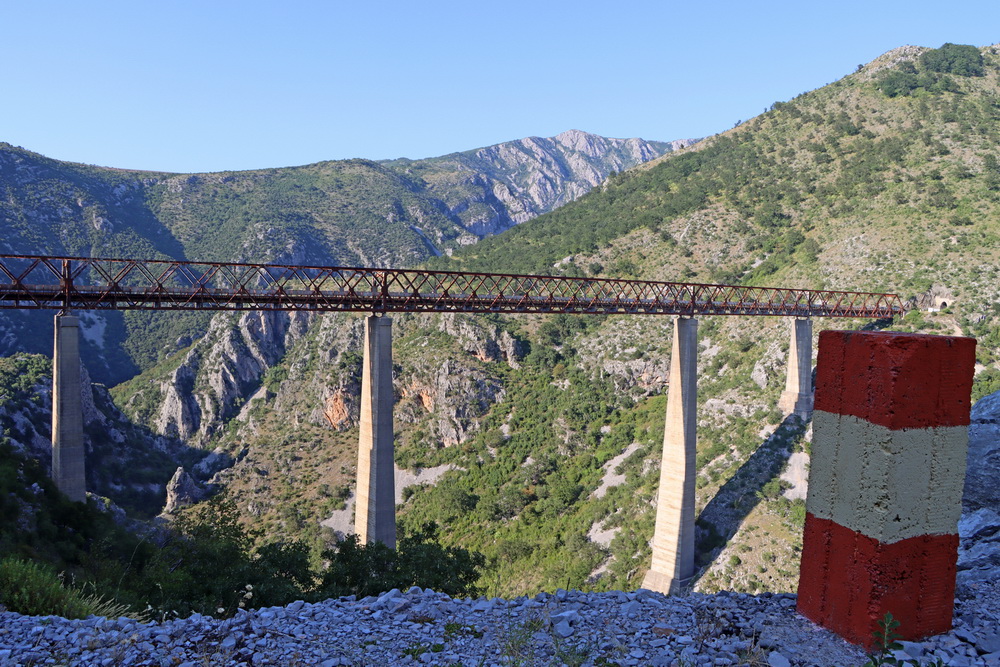
The Bridge of Giants: Five decades after its construction, the Mala Rijeka Viaduct remains the highest railway bridge in Europe.
A childhood obsession brought me back to these tracks. The Belgrade–Bar railway is turning fifty. Instead of booking a sleeper car, I grabbed the keys. My battered Renault Clio carries me forward. The plan is simple. Follow the rails from the parallel highway. Locate the isolated stations hidden deep in the Balkan karst. This railway was never a simple route from point A to point B. It is a sharp cut. It pierces jagged river canyons and cuts through the wetlands of Lake Skadar. It heads straight for the Adriatic coast.
The Outpost at kilometre 390: The remote Bioče station offers a spectacular view of the mighty viaduct, the Morača River, and the mountain peaks on the horizon.
Part I: Cars, Canyons, and Concrete Ghosts
The journey hits reality at Bijelo Polje, kilometre 297. This is the border checkpoint between Serbia and Montenegro. Heavy, utilitarian Yugoslav architecture greets me. A faded sign reads: “Welcome to Montenegro!” The station sits in the wide Lim River valley. Steep peaks pin it down. These mountains border Biogradska Gora and Durmitor national parks. This is the first warning. The terrain demands respect.
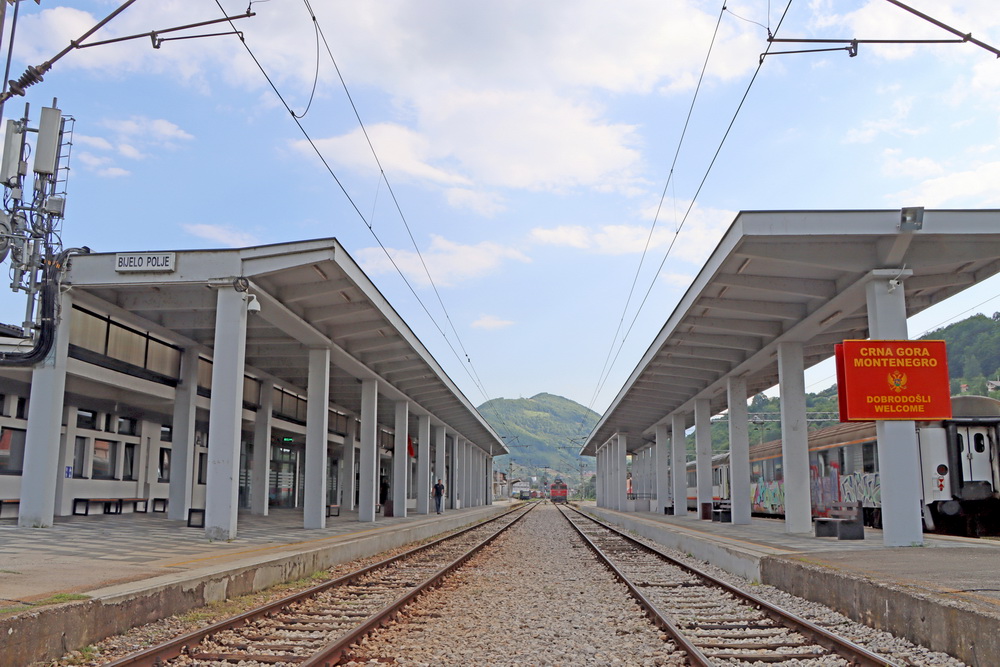
The Gateway to the Karst: Standing at kilometre marker 297, the utilitarian station at Bijelo Polje serves as the official border checkpoint. Here, in the shadow of the Lim River valley, the railway prepares to leave the wider lowlands and tackle the vertical walls of the Montenegrin highlands.
From Bijelo Polje, I push south. Mojkovac lies ahead. I chase the deeper canyons.
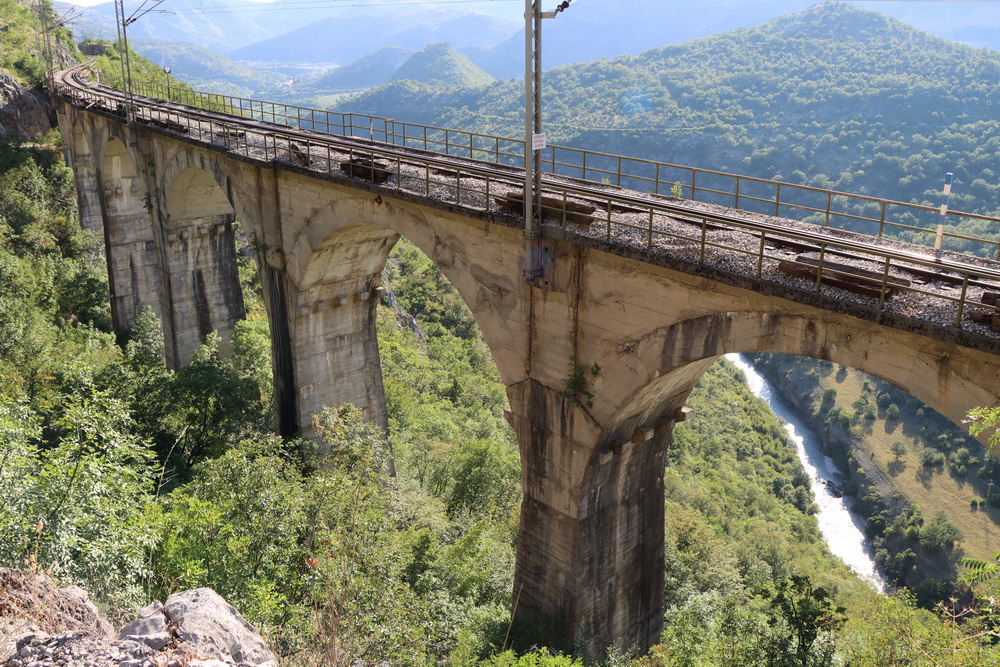
I bypass minor stops. These are remote mountain outposts. You can only reach them on foot via steep goat paths. Ten kilometres of twisting road pass. Suddenly, the valley opens up. Elegant concrete spans appear. The Slijepač Bridge viaduct. Right on cue, a locomotive whistle echoes through the valley. It sounds like a scene from an old movie. The morning train from Belgrade roars across brutalist arches. It hangs high above the grey stone.
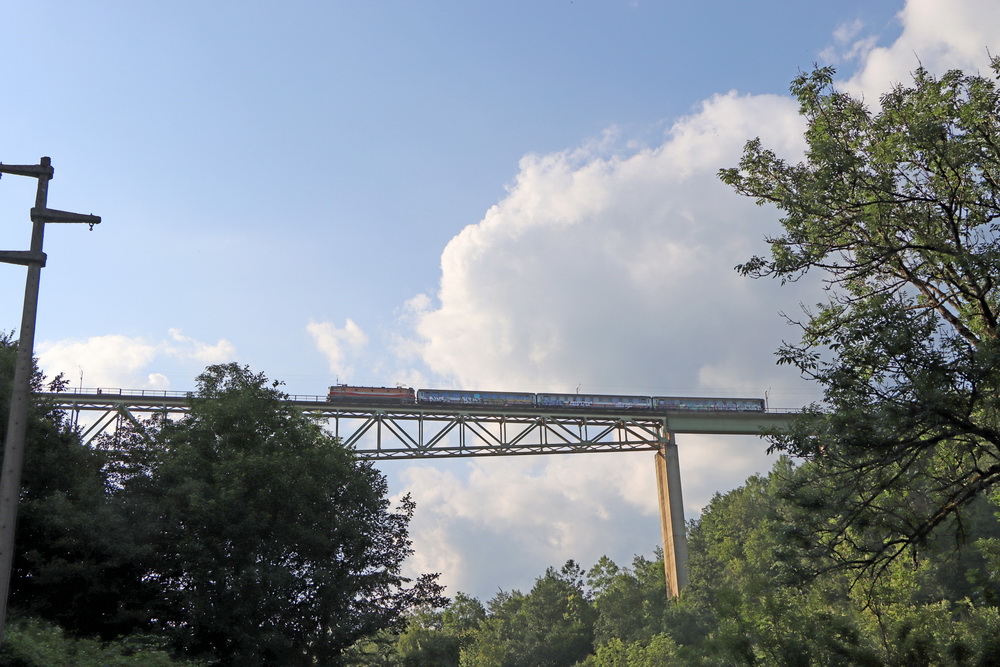
Chasing the Echoes: A morning passenger train from Belgrade thunders over the brutalist arches of the Slijepač Bridge viaduct. Hidden deep within the limestone valleys, these concrete spans act as vital lifelines for remote mountain outposts that remain completely inaccessible by car.
I keep driving. The Clio’s engine whines. Both car and track battle the vertical climb. In just twenty kilometres, the tracks claw upward. They gain a staggering 260 vertical metres. We enter Mojkovac at 800 metres above sea level. Here, the Lim River vanishes. The turquoise waters of the Tara appear. Locals call it the “Tear of Europe.” From the road, the river shrinks. It looks like a thin, shimmering wire at the bottom of a deep gorge. High above the roaring waters, the rails cling to vertical cliffs.
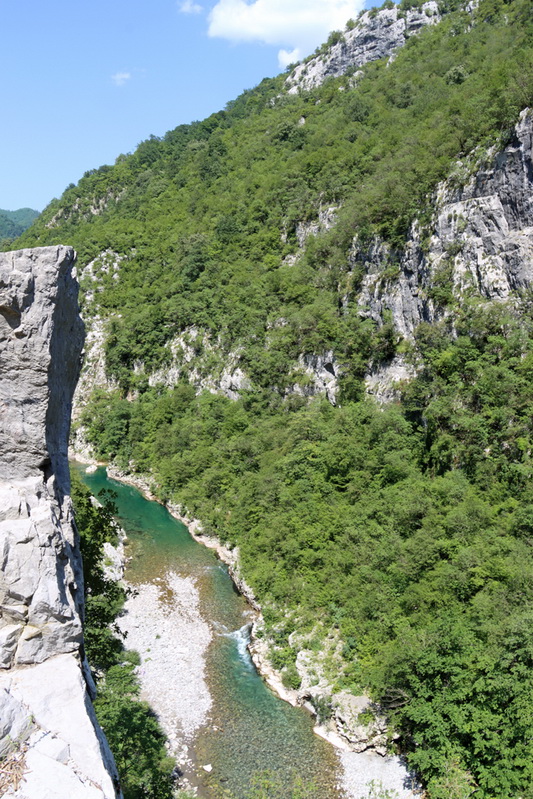
The Tear of Europe: Looking down into the wild chasm of the upper canyon, the turquoise waters of the Tara River appear as a delicate wire. High above the roaring waters, the railway tracks are chiselled directly into the sheer vertical cliffs, navigating a brutal 260-metre vertical climb between the river basins.
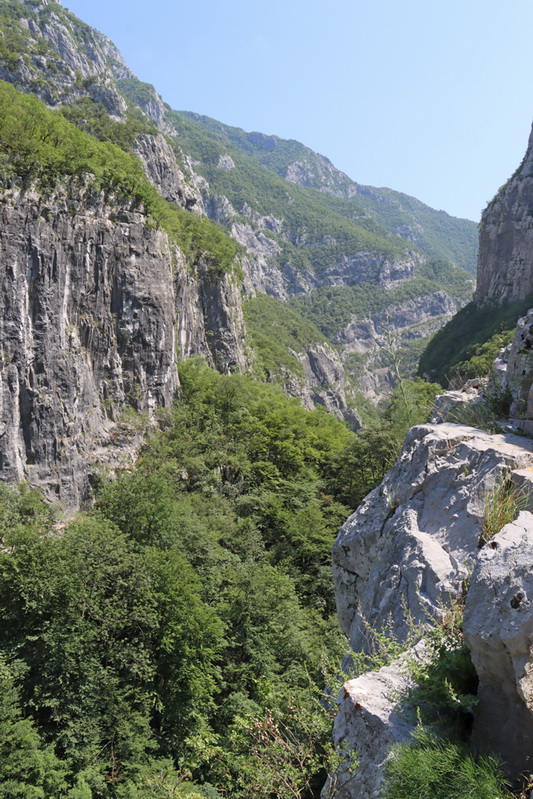
High above the roaring waters: The railway tracks are chiselled directly into the sheer vertical cliffs, navigating a brutal 260-metre vertical climb between the river basins.
Late afternoon arrives. I chase the sun toward Kolašin. I think about the workers who started this. Connecting landlocked Belgrade to the Adriatic coast
once sounded like technical science fiction. One-third of the entire route had to pierce Europe's harshest mountain terrain. Yet, Yugoslav engineering
pulled it off. Domestic companies designed and built the entire project.
This is a monument to mid-20th-century enthusiasm. Youth work brigades from across Yugoslavia gathered here. International volunteers joined them from the
UK, France, Belgium, Germany, the USSR, and Poland. They literally chiselled this railroad out of solid stone.
At Kolašin—kilometre marker 341 from Belgrade—the tracks hit their peak. We are 1,032
metres above sea level.
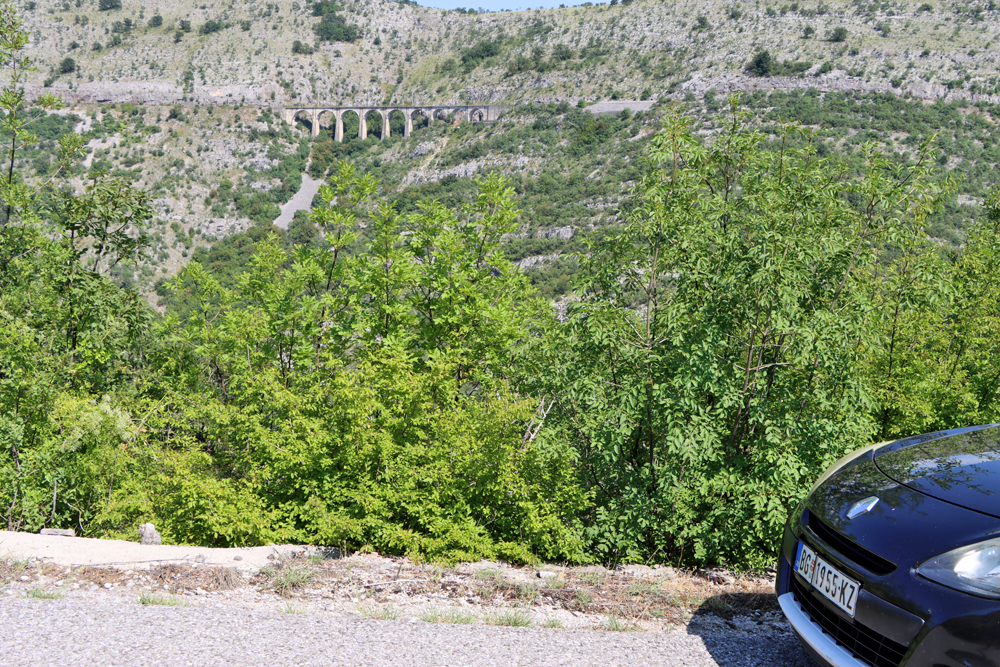
Chasing the Rails: Some sections of the line run directly parallel to the old highway, offering rare, fleeting angles of tracks carved into otherwise inaccessible cliff faces.
Part II: Echoes in the Canyon and the Bridge of Giants
After a night in Kolašin, I park the Clio. I board the morning train. To understand this canyon, you must feel it from the rails. I step off at Trebešica station. Here, time has
ground to a halt. Inside the signal box, station master
Bojan Lukovac keeps watch. On his desk sits a fifty-year-old Siemens control panel. It is the analogue heart of the station.
Buttons click. Relays hum. The system is fully operational. Following strict safety protocols, every single signal is set to red.
I catch the next train back up. This time, the screeching brakes are silent. The raw, heavy roar of the locomotive takes over. The engine fights gravity on the steep climb.
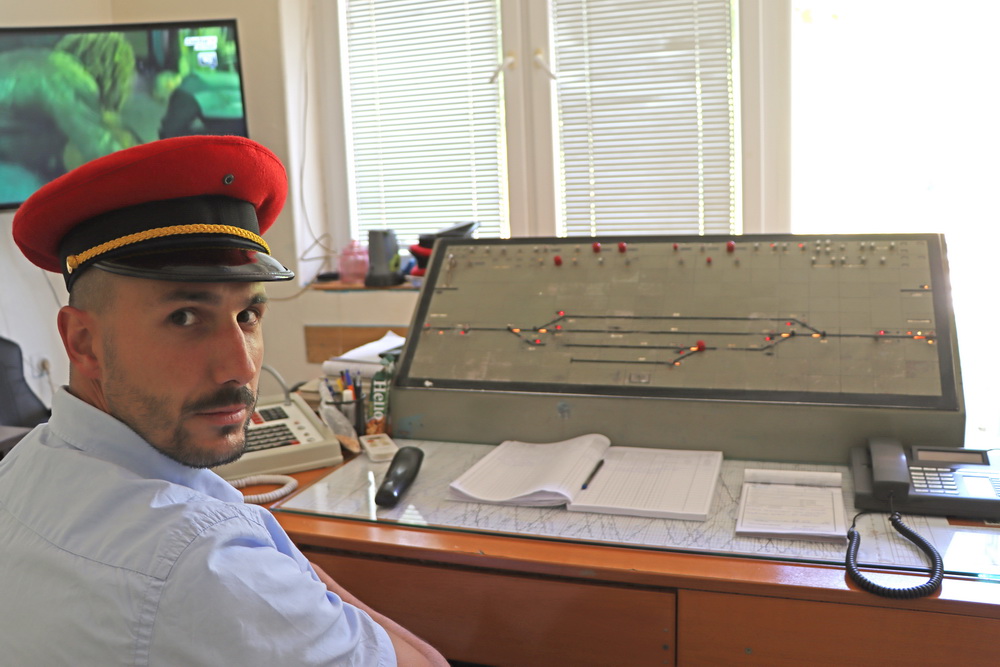
The Analogue Heart: Inside the isolated outpost of Trebešica station, station master Bojan Lukovac keeps watch over a 50-year-old Siemens control panel. Installed during the railway's 1976 inauguration, this fully operational analogue system remains a reliable safeguard against the unpredictable hazards of the mountain pass.
We leave the alpine chill of Kolašin behind at 1,032
metres above sea level. The climate shifts rapidly as the Renault Clio rattles southward. Lush
forests vanish. Naked, sun-bleached limestone takes over. This is the Morača River canyon.
Here, the railway enters its most hazardous phase. The tracks descend an unforgiving 25-promille gradient toward the Adriatic Sea. Yugoslav engineers faced an abyss.
To conquer it, they turned the mountains into a concrete honeycomb. They drilled 102 tunnels in this section alone.
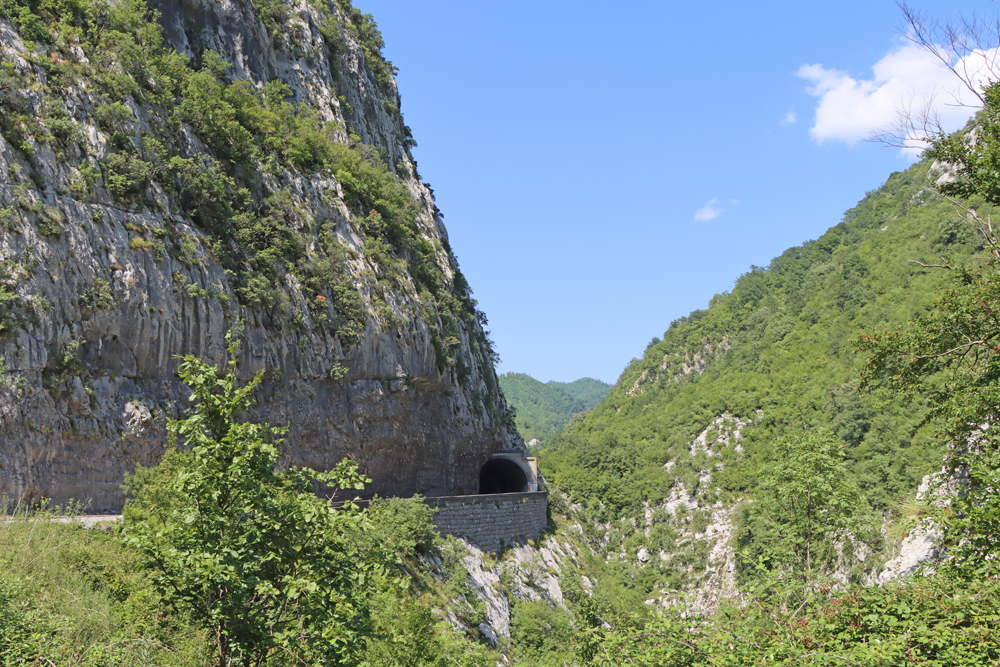
The Concrete Honeycomb: Straddling the sheer vertical walls of the Morača Canyon, the tracks play a constant game of hide-and-seek with the stone. Descending a steep 25-promille grade, the line relies on back-to-back tunnels chiselled out of limestone to safely lower trains from the high mountains.
Our next stop offers a peaceful intermission. Morača Monastery. This stone sanctuary was built by the Nemanjić dynasty in 1252. Quiet quarters. Blooming gardens. Silence. The only sound is the roar of the Morača River far below. Somewhere on the opposite wall of the canyon, the railway runs completely blind. It is buried inside an underground labyrinth.
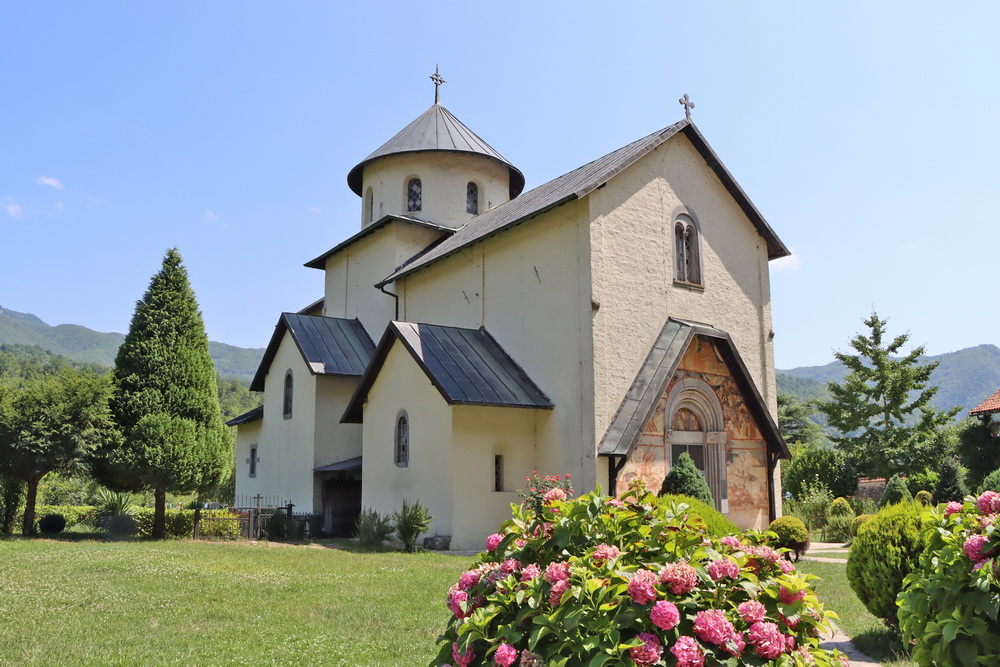
Morača Monastery: After a steep descent through the serpentines of the Morača canyon, the flower gardens and historic silence of the medieval Morača monastery offer travellers a perfect place to find peace.
I step out of the blinding Balkan sun. The cool gloom of the monastery church greets me. I am looking for its most famous treasure. A 13th-century fresco titled “The Raven Feeding the Prophet Elijah.” Ignoring the strict 'No Photography' sign by the heavy wooden door, I quickly focused my lens. The desire to capture Picasso’s hidden muse was simply too strong to resist.
Legend says Pablo Picasso saw this piece in Paris in 1950. He recognized early signs of Cubism in its lines. He called it one of the most beautiful paintings in the world. True or not, the story demands a pause.
Determined to photograph the frame legally, I try to track down the Abbot. I ask a young novice in the courtyard for permission. “The Abbot is sleeping after lunch,” the boy whispers. I decide to wait. Hours later, as the sun begins to drop and I prepare to head back toward Kolašin, I try my luck again. The novice just shakes his head. “The Abbot is having his dinner right now. If you want a photo, you must mail an official request to the Metropolitanate in Cetinje.”
Faced with a bureaucratic brick wall in a 13th-century monastery, I take matters into my own hands. I slip back into the church, wait for the shadows to clear, and quickly focus my lens. The desire to capture Picasso’s hidden muse is simply too strong to wait for official letterhead from the coast. As it turns out, the masterwork displayed in the main hall is a meticulously crafted replica. The priceless original remains safely locked away from public eyes behind the altar iconostasis. Yet, looking at the exposed lines under the dim candlelight, Picasso's vision comes alive anyway.
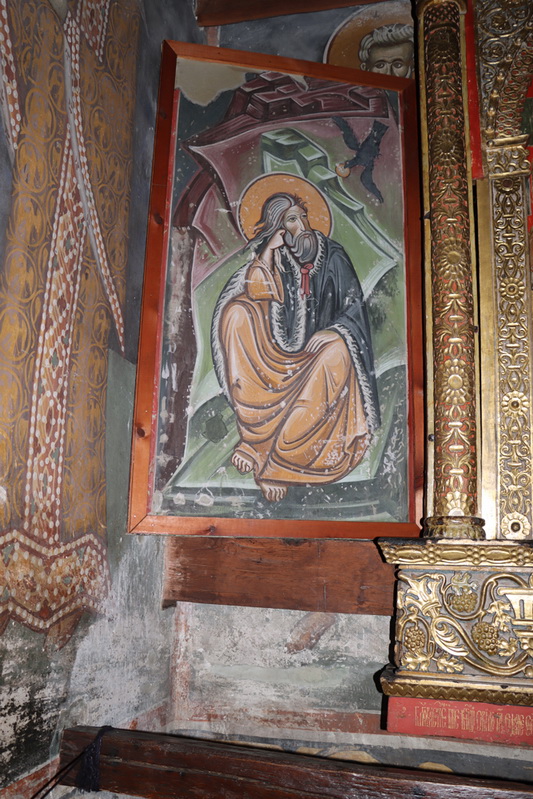
The Prophet in the Shadows: A beautifully detailed, publicly exhibited copy of the 13th-century fresco “The Raven Feeding the Prophet Elijah” inside Morača Monastery. While the priceless original remains locked away from public eyes behind the altar iconostasis, this accessible replica allows travellers to study the exact lines where Pablo Picasso famously recognized the structural foundations of early Cubism.
By noon, the heat is rising. Two engineering marvels lie ahead: the Mala Rijeka viaduct and Bioče station. I follow the vague directions of locals in Klopot village. The Clio pushes up a narrow mountain road. Then, a low, rhythmic thudding echoes from the mountains. With every hairpin turn, the noise grows louder. It shifts from a chaotic rattle into a heavy, dramatic crescendo. It sounds like the thunderous fortissimos of Stravinsky’s “The Rite of Spring.”
The road ends at a rusty barricade marked “No Entry.” A cheerful stray dog named Lucky greets me. He cares nothing for my press credentials. He only
wants the leftover Kolašin burek on my passenger seat.
I step past the gate. I am standing on a masterpiece of global civil engineering. Five decades after its construction, the Mala Rijeka Viaduct remains the highest railway bridge in Europe.
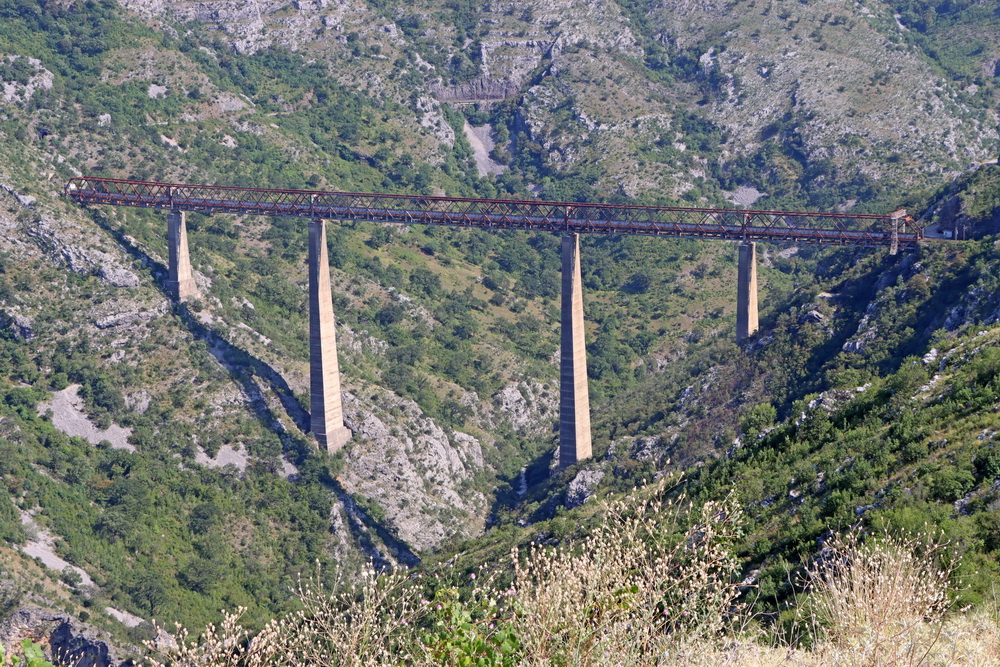
The Masterpiece of civil engineering: Towering 200 metres above the canyon floor, the Mala Rijeka Viaduct was the highest railway bridge in the world until 2001. Supported by massive concrete pillars—the largest plunging 139 metres deep into the bedrock—this 498-metre-long marvel required over 23,000 cubic metres of concrete to tame the Balkan karst.
Designed by engineer Ljubomir Jevtović and built by the Yugoslav giant Mostogradnja, it spans the chasm on four giant pillars. The largest plunges nearly 140 metres into the bedrock. The rails sit a dizzying 200 metres above the dry riverbed. Mountain gales here routinely clock 180 km/h. To combat this, the sides are reinforced with heavy steel plates. The mystery is solved. The drums I heard on the climb were just these massive steel plates hitting the superstructure in the wind.
I fulfil a childhood dream. I walk out to the middle of the span. Kilometre 385.3 from Belgrade. Standing beneath it, the scale is dizzying. It is a
brutalist monument of concrete and steel. It feels both alien and perfectly integrated into the jagged topography.
I wait for nearly an hour. The afternoon local train from Bijelo Polje emerges from the rock. The metallic rumble of the wheels echoes through the
canyon walls. The train disappears into the next tunnel. It leaves behind only the sound of cicadas and the rushing river below.
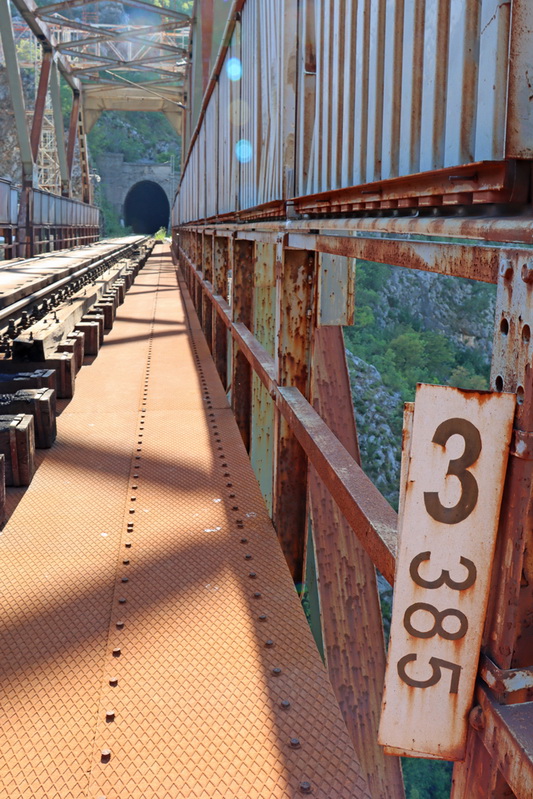
The famous 385.3 km from Belgrade: A table in the middle of the Mala Rijeka viaduct precisely marks the distance of 385.3 km from Belgrade.
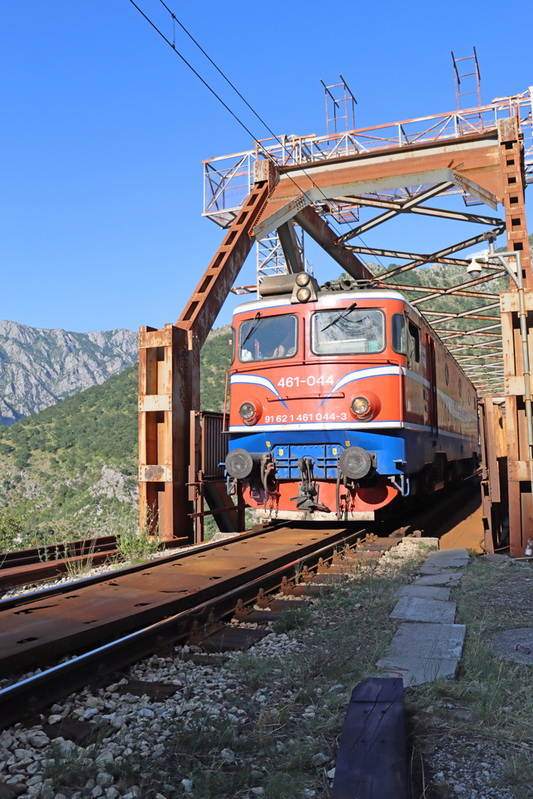
High in the Sky: An afternoon local train crosses the 498-metre expanse of Mala Rijeka.
Leaving that windy, iron giant feels like stepping back into reality. Time to move on. Five kilometres further sits Bioče station. The Clio cannot walk the railroad ties. I backtrack to the main road. I descend from the high peaks into a suffocating, low-altitude furnace. In the village of Bioče, I find a dirt trail leading up to the station. The road is washed away. Only a graveyard of large rocks remains. The car will not survive this. I park on a narrow shoulder.
The thermometre reads 40°C. The exposed, radiating limestone pushes the feeling closer to fifty. The uphill hike without shade feels endless. I finally reach the massive stone arches and the lonely outpost of Bioče station at kilometre 390. I run for cover.
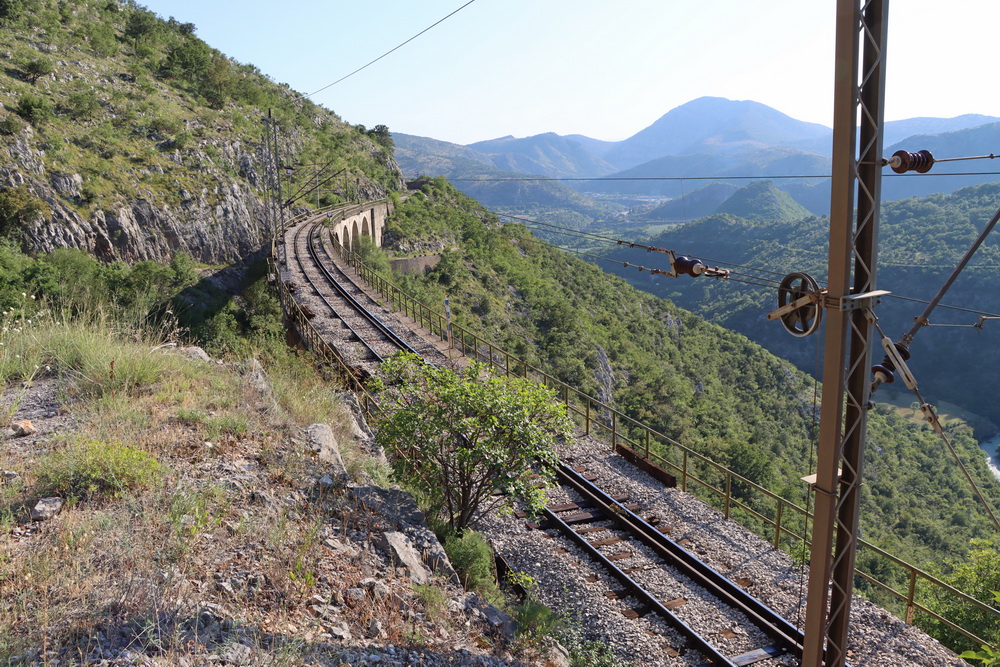
The Outpost at Kilometre 390: The remote Bioče station offers a spectacular view of the mighty viaduct, the Morača River, and the mountain peaks on the horizon.
Inside the station house, station manager on duty welcomes me. He offers a glass of ice water and a patch of deep shade. We cool off. Our conversation drifts to the local residents you cannot ignore out here. Horned vipers. He just smiles. “Oh, they’re out there,” he says casually. “But in this heat, they’ve crawled deep into the hollows under the track switches. Just watch where you step!”
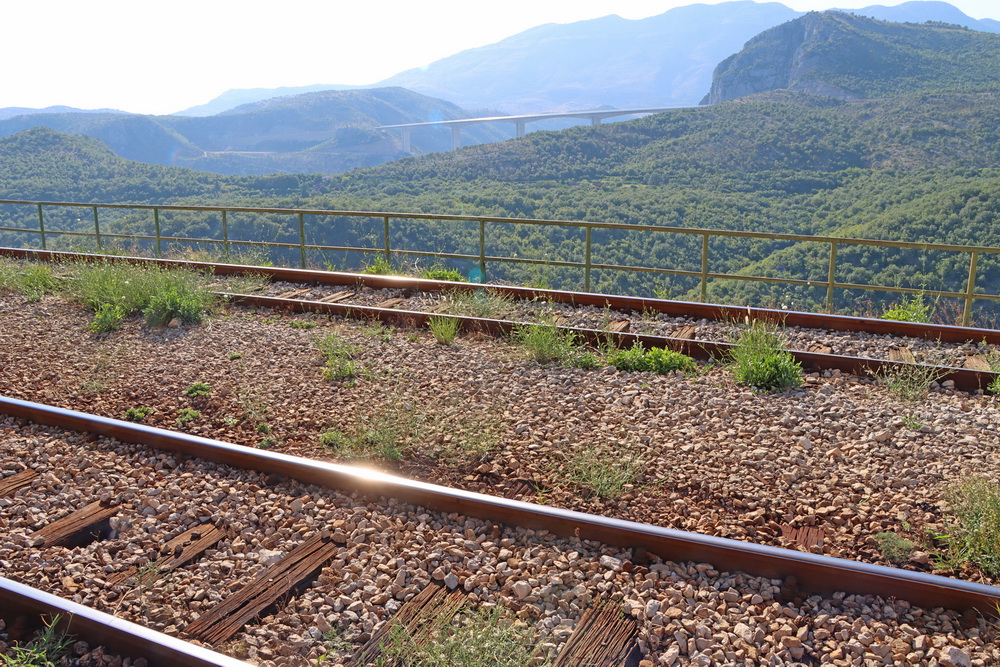
The Radiating Limestone: Without shade and shelter, the summer heat at Bioče station regularly exceeds 40°C. The intense glare of the sun on the steel rails magnifies the heat, creating a suffocating environment for the railway's guardians.
By late afternoon, the sun began to drop. Looking west through the towering concrete arches of the viaduct, the mountain ridges stacked up against each other, fading into the hazy, golden backlight of a warm, cinematic frame.
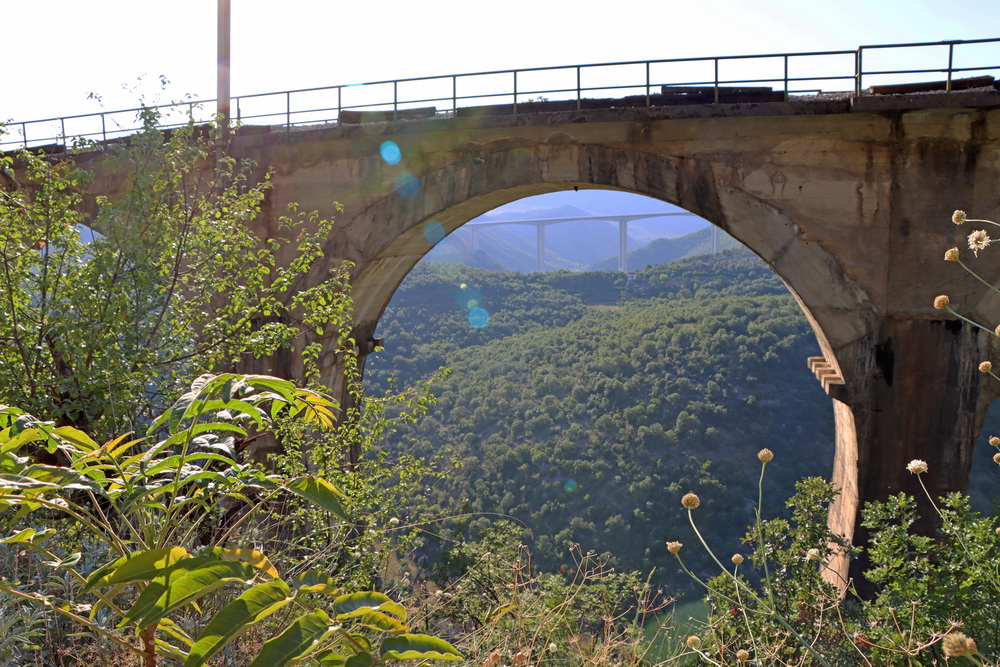
Golden Hour in the Karst: A unique, cinematic shot capturing the mighty pillars of the viaduct with a modern road bridge fading into the distant Montenegrin haze.
Part III: The Wide Water and the Last Stop
Leaving the scorching rocks of Bioče behind, the railway shifts gears completely. The landscape transforms. After hundreds of kilometres through wild mountain canyons, the line descends. The tracks flatten into a fertile valley. This green alluvial basin feels like an entirely different planet. The harsh stone walls vanish.
Following the lower course of the Morača River, I enter Podgorica railway station. Kilometre 405. Here, the altitude drops to just 35 metres above sea level.
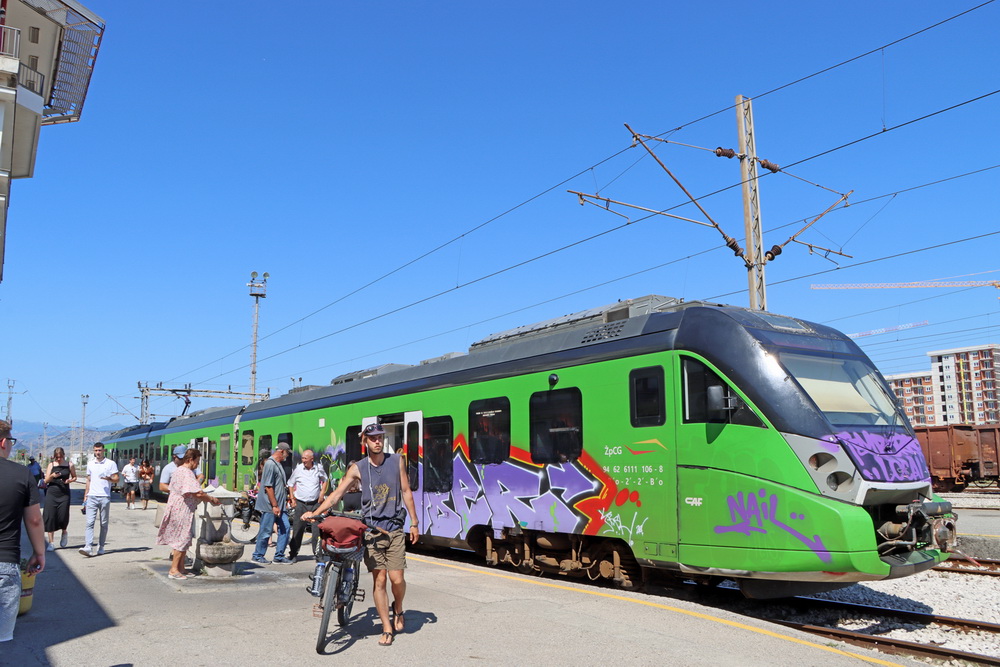
The Alluvial Drop: Marking the start of the railway's third distinct geographic section, Podgorica station sits at just 35 metres above sea level. In the span of a few dozen kilometres, the tracks have dropped a staggering 1,000 vertical metres from their alpine apex near Kolašin.
The platforms buzz with passengers. Two trains cross paths. One heads toward Bar. The other climbs back toward Belgrade. A local train from Bar sits at the platform. It must wait. The tracks require an intersection with the oncoming train from Belgrade. The train crew exchanges physical papers. Marina Mulišić, the stationmaster on duty, steps forward. She raises her signal disc. The drivers depart.
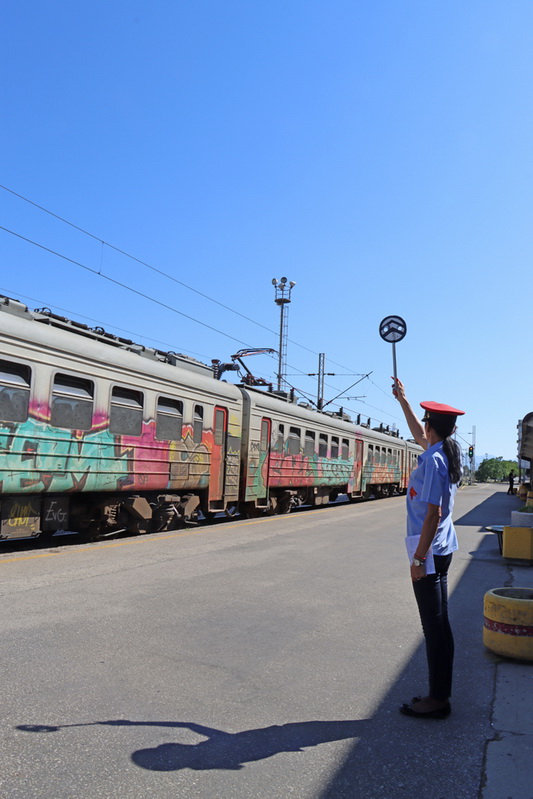
Human Semaphores: Train dispatcher Marina Mulišić raises her signal baton, giving permission for the local train to depart. Despite modern digital updates across European networks, the human hand and strict analogue paperwork remain the ultimate authority for safety on the Montenegrin line.
The trains set off, and I continue toward Virpazar, my overnight stop. As I approach Lake Skadar, the horizon opens wide, revealing the largest freshwater basin in the Balkans. Fed by underground karst networks and the seasonal pulse of the Morača River, the lake expands from 370 to over 530 square kilometres during seasonal floods. This unique ebb and flow has created one of the richest wetlands in Europe, protected by the Ramsar Convention and home to over 280 species of birds.
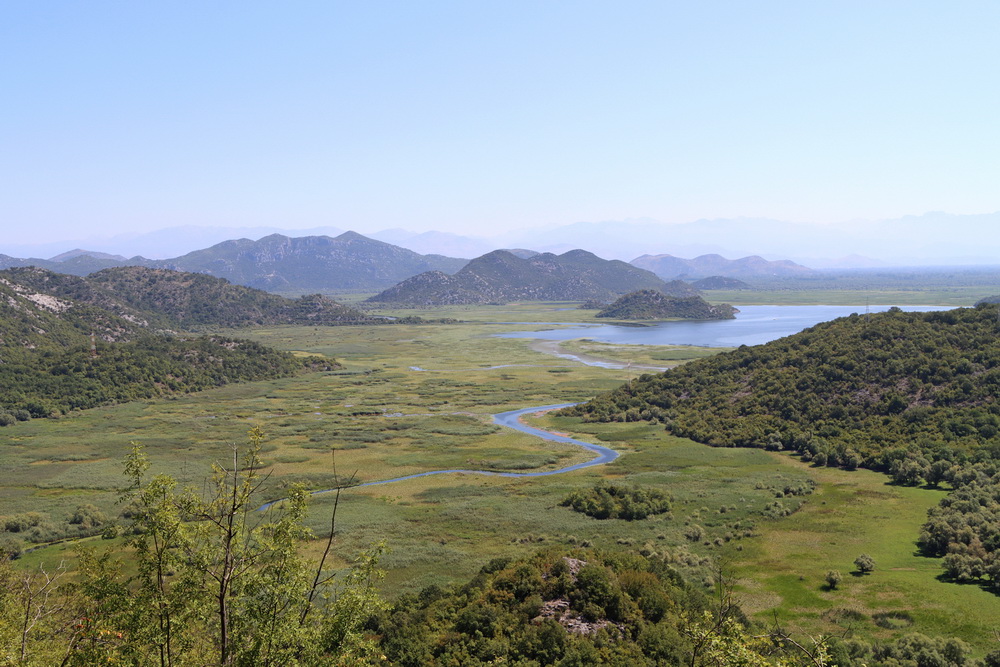
The Bird Kingdom: High angle panoramic view of the shifting wetlands of Lake Skadar, a Ramsar-protected sanctuary housing 280 bird species.
Beyond its ecological value, the lake is a testament to the forward-thinking design of the original railway. Nearby historic ecosystems, such as the 15th-century river port of Rijeka Crnojevića, were deliberately bypassed by engineers to protect their pristine state. To safeguard fragile historical sites like the settlement of Rijeka Crnojevića, Yugoslav planners deliberately altered the path, keeping the heavy steel away from the pristine shores.
After visiting Rijeka Crnojevića I arrive in Virpazar just in time for dusk. I climb the ancient Besac Fortress and watch the small town get swallowed by the vast, silent lake.
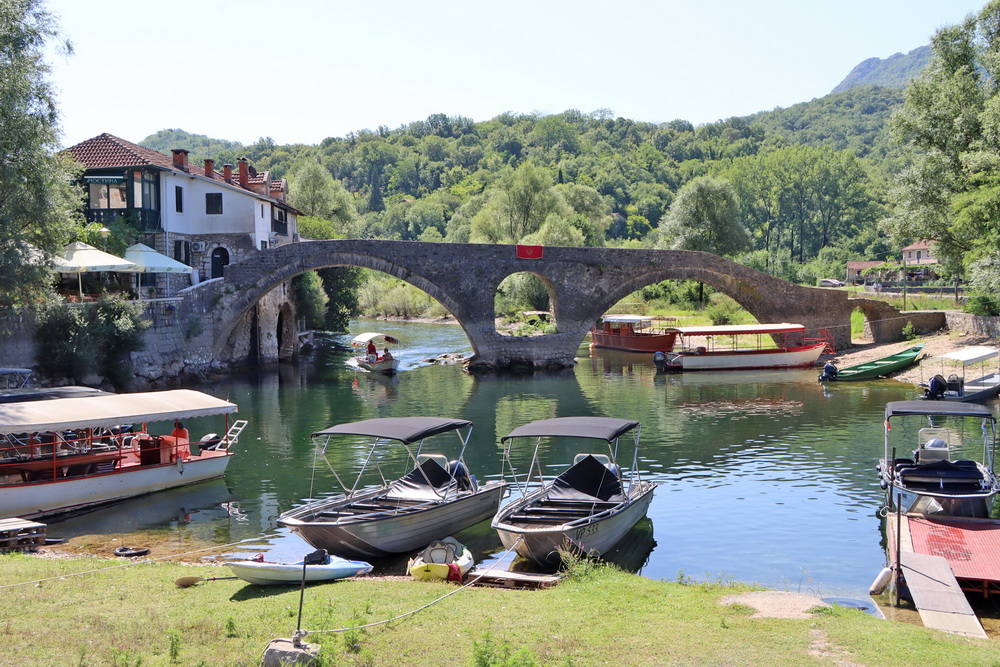
The settlement and natural asset: The Crnojevića River on Skadar Lake is a picturesque old settlement and part of a protected exceptional natural asset.
The next morning, the platform at Virpazar station looks like a miniature "Tower of Babel". I meet passengers from Germany, Belgium, Jordan, and China. Traveling along this miraculous railway, they arrived at Lake Skadar to enter the bird kingdom on local boats.
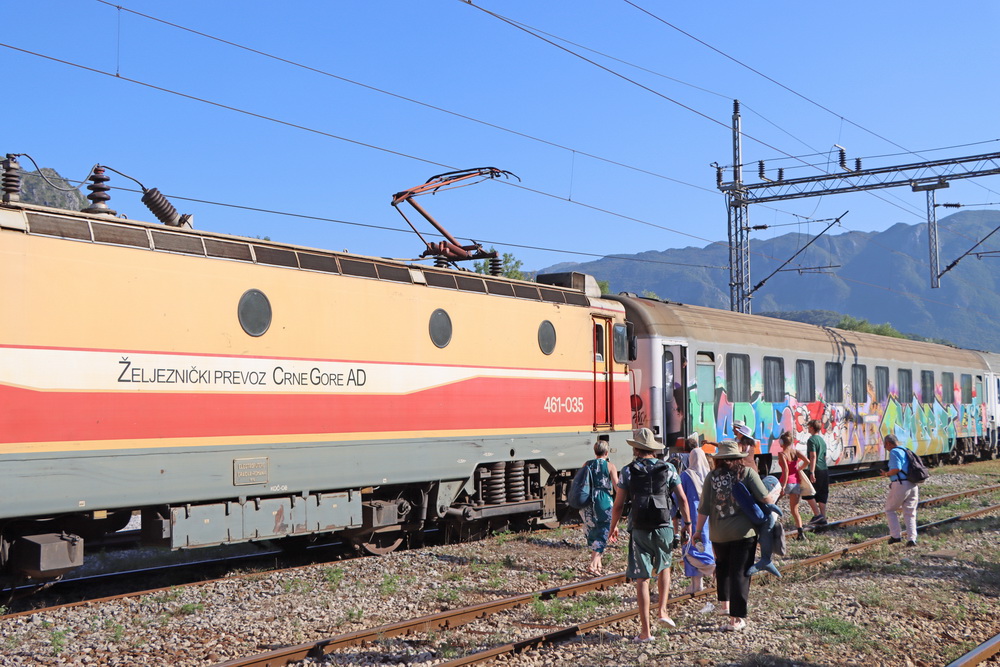
The Tower of Babel on the Karst: Once a quiet station on Montenegro’s pioneer narrow-gauge line in 1908, Virpazar has transformed into a global eco-tourism hub. Today, the platforms host a melting pot of international travellers using the train as a green gateway into the wilderness. Virpazar is the main starting point for sailing on Skadar Lake and exploring its hidden backwaters.
I see off the local train to Bijelo Polje. I depart by car for Bar. Today, the road journey to the Adriatic Sea is short. The 4,189-metre-long Sozina road tunnel opened in 2005. Ten minutes in the bowels of the mountain finish the drive.
I remember the old days. The gruelling, multi-hour drive along the dangerous cliffs of Petrovac Mountain. Yet, those old cliffs rewarded drivers
with an unreal first encounter with the sea, framing the centuries-old stone walls of Sveti Stefan and Budva.
Just a step away, the railway runs through its own Sozina tunnel. It is an impressive 6,170
metres long.
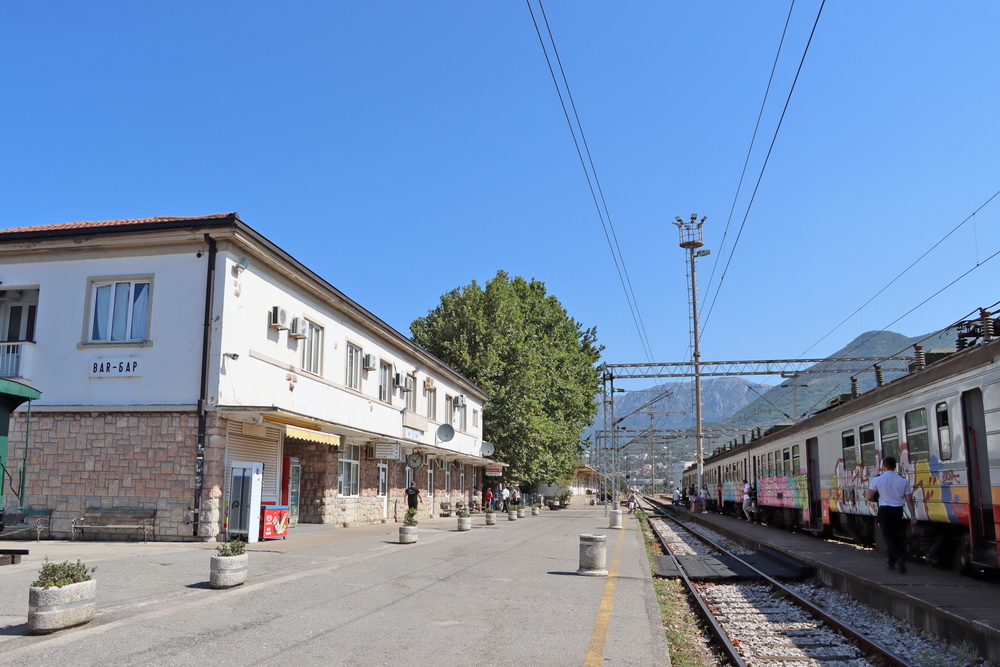
The Last station of the Miraculous Belgrade-Bar Rail: Bar railway station, located 455 km from Belgrade, is the last station on the Belgrade-Bar railway.
I arrive in Bar and I have two hours before the evening train arrives from Belgrade, giving me a chance to explore Old Bar—a medieval fortified town located at the foot of Mount Rumija. Reminders of past times are everywhere: the clock tower, the Ottoman aqueduct, and especially an olive tree that is a living time capsule over 2,200 years old. Not far from here was the starting point of the first Montenegrin narrow-gauge railway, which connected Old Bar with Virpazar from 1908 until the mid-1950s.
I return to the Bar railway station, the last stop of my journey, at kilometre 455.
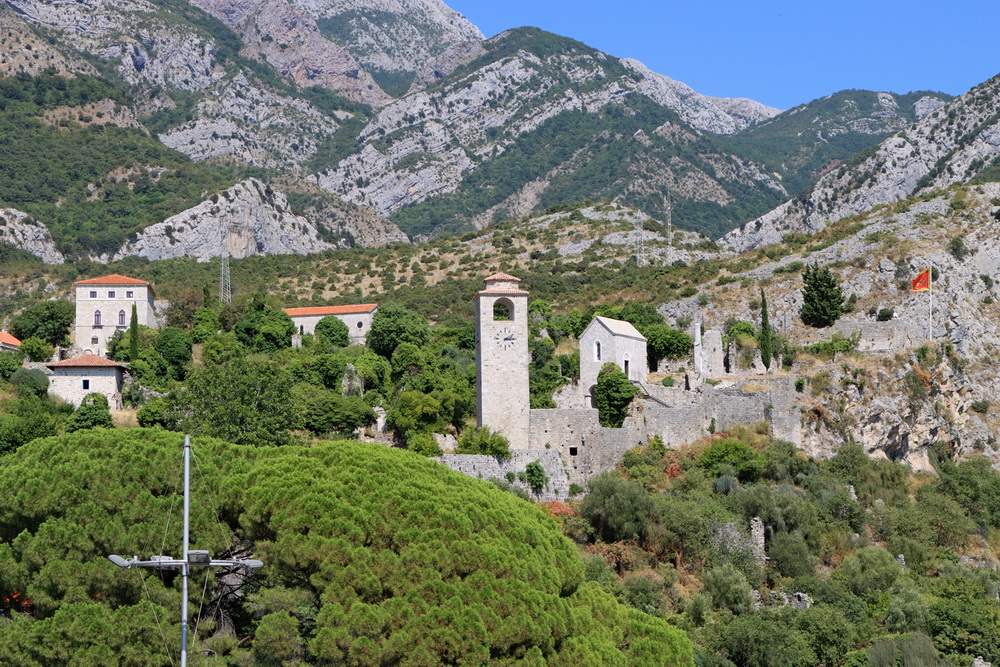
Remembrance of the Montenegrin Railways Born : Old Bar is a preserved medieval Ottoman fortress and the ending station of the first Montenegrin narrow-gauge railway built in 1908.
While waiting, I stand next to “Sutorman.” This old steam locomotive from 1908 stands proudly on display. Then a sharp whistle cuts the afternoon silence. The train from Belgrade glides smoothly onto the second platform. At this final terminal on the Adriatic coast, the European railway corridor reaches its epilogue.
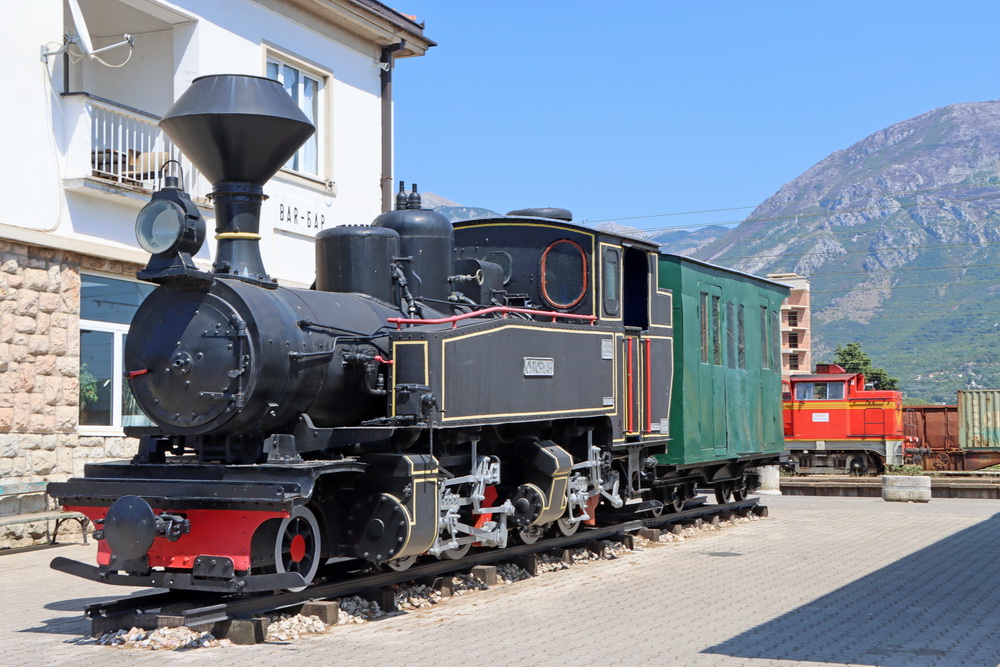
A Hero of Montenegrin Railway History: The steam locomotive "Sutorman" stands proudly at the station in Bar. It powered the train along the Rumija cliffs from 1908 until the mid-1950s
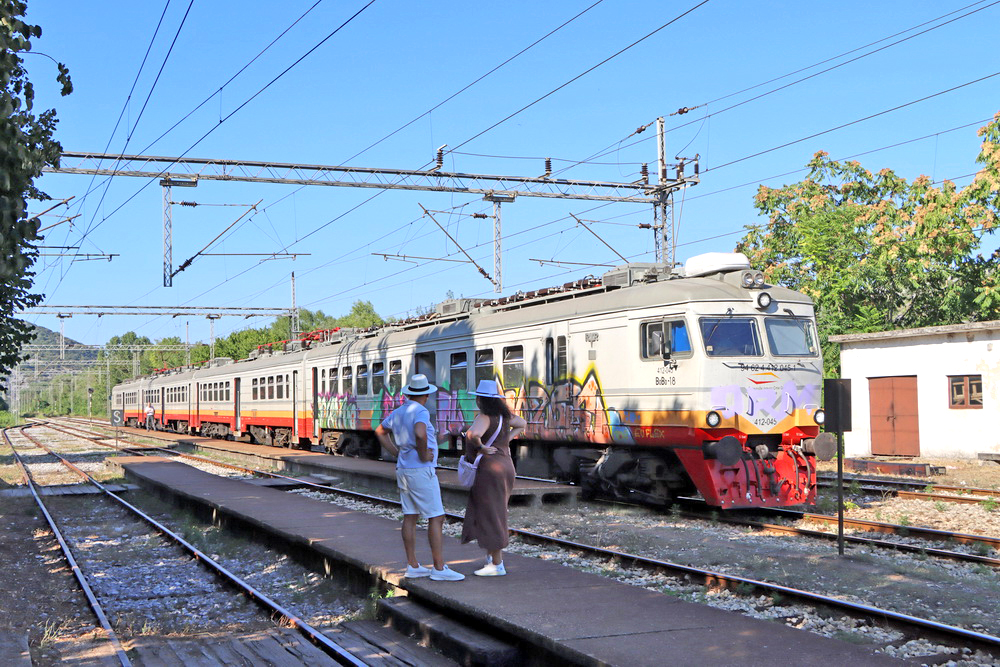
Waiting for the Next Travel: The platform of the Bar station and passengers waiting for the local train to Bijelo Polje.
For half a century, a journey that begins for many in the far north of Europe ends right here. It ends on a railway born from Balkan science fiction.
The sun sinks below the horizon. My gaze catches a ferry docked in the harbour. This railway does not leave you stranded on the platform in Bar. Instead,
it subtly guides you toward the open sea. It awaits your next journey straight to Bari, Italy.
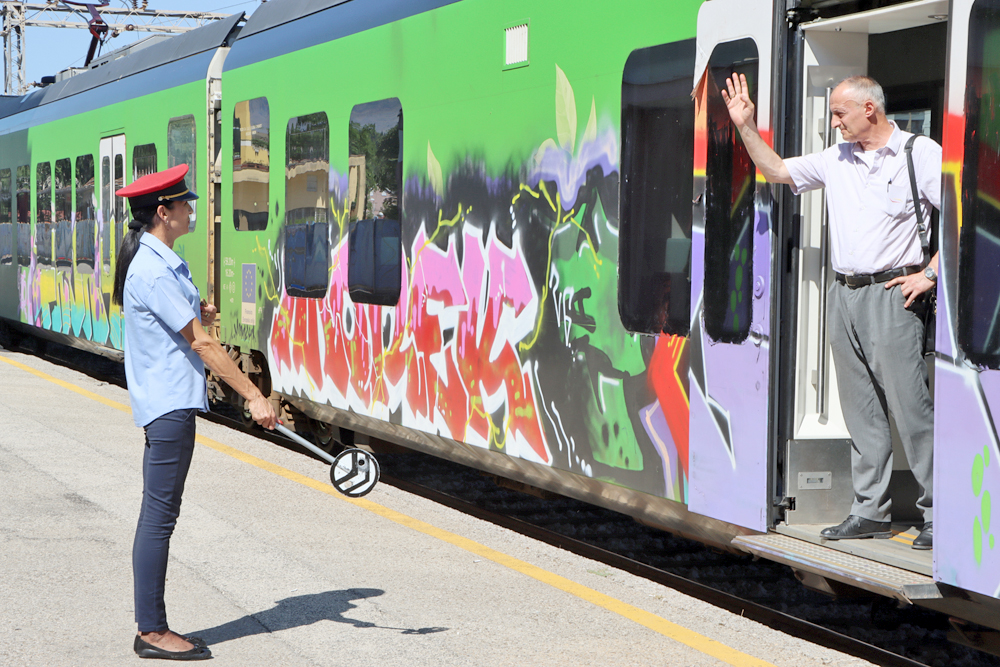
Warm Greetings Until We Meet Again: The duty dispatcher Marina Mulišić sends another train on its way before of the end of her day's shift.