
PROJEKTI, IZLOŽBE, DOKUMENTARNE REPORTAŽE, STRUČNI RADOVI
Stručni radovi
ORIGINAL PAPER - REPRINT
THE PARK OF FRIENDSHIP IN NEW BELGRADE
A Living Monument of Peace and Solidarity
Visit the Park of Friendship – a place where the hope for a more just world was born and lived. While the plane trees planted by 20th-century monarchs, presidents, and revolutionaries stand as silent witnesses to an era when Belgrade was a global beacon of solidarity, aggressive and profit-driven urban planning now threatens to permanently erase this living monument of international history. As political authorities look to impose commercial redevelopments on this sacred landscape—mirroring the controversial spatial overhauls seen in the "Belgrade Waterfront" project—the park faces an existential crisis.
Explore the scholarly abstract of the research paper published by the Mathematical Institute of SANU (Review of the NCD 47), delivering an intense historical narrative and an urgent plea to preserve this registered cultural heritage site from total destruction.
Abstract. The Park of Friendship in New Belgrade
was constructed in 1961 as a commemoration of the First
Non-Aligned Summit in Belgrade. This Park has offered
leaders, visitors of the city the opportunity of planting
their trees in the Park to symbolize Friendship, and hope,
and a purpose of better life in all parts of the world. This
article discusses the background and presents a number of
facts concerning the Park of Friendship. Furthermore, there
is a comparison between the Park of Friendship and the
global situation in the second half of the 20th century. The
Park was visited almost 200 world leaders since the founding
of the Non-Aligned Movement and the First Conference of
Non-Aligned Countries until the end of the 20th century. The
practice was to plant a tree that was a significant mark of
the Friendship and solidarity, and the desire of peace. To
ensure that information about the Park of Friendship is
kept, this article gives a list of all countries and the
heads of state who have planted their trees.
As time had passed the world changed: by overall progress,
but also by a turbulent events. Some of countries do not
exist anymore. Some of leaders from the Park finished their
political carrier, sometimes a life, under tragic
circumstances. By consulting available sources a review of
their later life is presented.
Finally, the emerging urban plans of the city of Belgrade
may result in the permanent destruction of this monument
place that is Yugoslav and, to put it mildly, a monument
place to the entire world. Hence, this paper is a call to
preserve the Park of Friendship in the form of the memorial
site since it is encrypted in the Cultural heritage register
of Serbia, besides other values.
Keywords: Park of Friendship, Non-Aligned Countries,
Federal People's Republic of Yugoslavia, Josip Broz Tito.
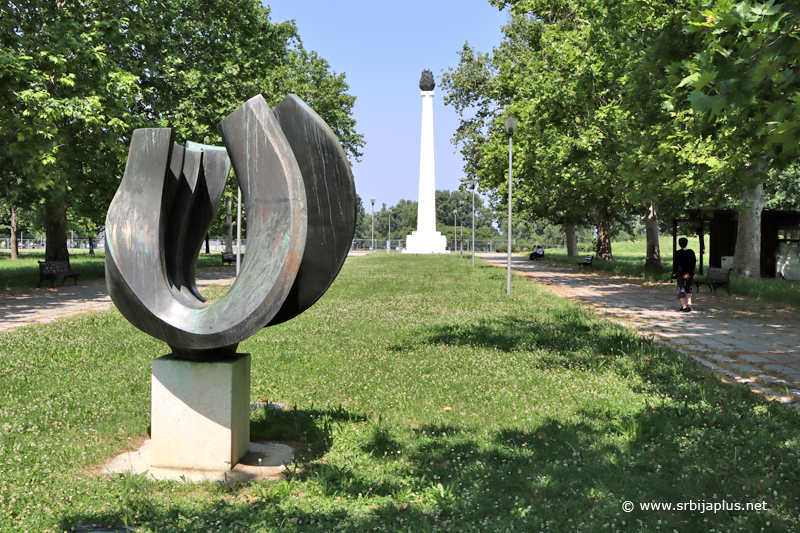
Plane trees in the Avenue of Peace constitute the main corridor of the Park
Visit the Park of Friendship – a place where the hope for a more just world was born and lived.
Read the academic paper by Zoran Cvetković examining history of the Park of Friendship before radical urban changes.
Read the PaperPark prijateljstva u Novom Beogradu
- Živi spomenik miru i solidarnosti
Posetite Park prijateljstva – mesto gde je rođena i gde je živela nada u pravedniji svet. Dok platani koje su sadili kraljevi, predsednici i revolucionari XX veka svedoče o vremenu kada je Beograd bio centar svetske solidarnosti, nova, agresivna urbanistička rešenja prete da trajno obrišu ovaj živi spomenar istorije. U svetlu agresivnih komercijalnih transformacija, po uzoru na projekat "Beograd na vodi", prostor Ušća nalazi se pred trajnim uništenjem.
Pročitajte naučni rad objavljen u časopisu Matematičkog instituta SANU (Review of the NCD 47) koji donosi dramatičan istorijski pregled, ali i hitan apel za spas i očuvanje ovog zaštićenog spomenika kulture.
Apstrakt. Park prijateljstva u Novom Beogradu zasnovan je 1961. godine u znak sećanja na Prvi samit nesvrstanih u Beogradu. Park je liderima i posetiocima Beograda ponudio da u njemu posade svoje stablo, koje simbolizuje prijateljstvo, nadu u bolji život u svim delovima sveta. Ovaj članak razmatra pozadinu i predstavlja niz činjenica o Parku prijateljstva. Pored toga, vrši se poređenje između Parka prijateljstva i globalne situacije u drugoj polovini 20. veka. Od osnivanja Pokreta nesvrstanih i Prve konferencije nesvrstanih zemalja Park je do kraja 20. veka posetilo približno 200 svetskih lidera. Običaj je bio da se posadi drvo, koje je predstavlja iskren simbol prijateljstva i solidarnosti, kao i želje za mirom. Da bi se informacije o Parku prijateljstva sačuvale, ovaj članak sadrži spisak svih zemalja i šefova država, koji su posadili svoje drveće.
Kako je vreme prolazilo, svet su pratili opšti napredak, ali i turbulentni događaji. Neke od zemalja više ne postoje. Neki od lidera iz Parka završili su svoju političku karijeru, ponekad i život, pod tragičnim okolnostima. Konsultujući dostupne izvore, dat je pregled njihovog kasnijeg života.
Nažalost, nov́i urbanistički planovi Grada Beograda mogu dovesti do trajnog uništenja ovog spomenika, koji je jugoslovenski i, blago rečeno, spomen-mesto celog sveta. Zato ovaj rad je poziv da se Park prijateljstva sačuva kao dosadašnje spomen-obeležje, budući da je, pored ostalih vrednosti, upisan u registar kulturne baštine Republike Srbije.
Ključne reči: Park prijateljstva, Novi Beograd, Pokret nesvrstanih zemalja, Federativna Republika Jugoslavija, Josip Broz Tito.
Posetite Park prijateljstva u kome se rodila i živela nada za pravednijim svetom.
Pogledajte dokumentovanu reportažu i analizu Zorana Cvetkovića o prostornim i kulturnim determinantama srca Beograda pre radikalnih urbanističkih izmena.
Pogledajte reportažu
Download the full paper from:
|
|
|
|
|
eLibrary of Mathematical Institute of the Serbian Academy of Sciences and Arts |


