
PROJEKTI I STRUČNI RADOVI
Stručni radovi
ORIGINAL PAPER - REPRINT
THE THESSALONIKI RAILWAY CORRIDOR:
Technical evolution, architectural heritage and socio-cultural memory of the Niš–Preševo mainline
The development of the Balkan railway network in the late 19th century fundamentally reshaped European geopolitics, creating a vital economic and cultural artery between West and East. At the heart of this transformation lies the Thessaloniki Railway Corridor—specifically the 156.76-kilometre Niš–Preševo mainline. This webpage presents an exclusive abstract and key insights from the comprehensive research project 'Technical and Architectural Heritage on the Niš–Preševo Railway', originally published in the prestigious NCD Review (Issue 48) by the Faculty of Mathematics, University of Belgrade. Combining rigorous archival historiography with extensive field surveys, this study highlights the critical tension between modern infrastructural upgrades and the urgent need to preserve endangered 19th-century railway architecture.
Abstract. The development of the railway network in the Kingdom of Serbia during the late 19th century established a critical geopolitical and economic artery connecting Western Europe with the Near and Middle East. This paper presents the comprehensive findings of the research project "Technical and Architectural Heritage on the Niš–Preševo Railway (Thessaloniki Railway)", evaluating this specific 156.76 km segment within the broader historical and contemporary framework of the Belgrade–Preševo corridor (Pan-European Corridor X).
Utilizing a multidisciplinary approach that combines archival historiography with extensive field-survey methodology, this study systematically documents the line’s civil engineering structures, lineside apparatus, and station architecture. The findings reveal a critical tension between infrastructural modernization and heritage preservation. Active structural overhauls along the route have led to the de-staffing, abandonment, and imminent demolition of late-19th-century station buildings and minor halts, which were originally built according to standardized European architectural typologies. Consequently, the authentic photographic and technical registry compiled in this project serves an urgent preservation function.
Furthermore, the paper examines the rich socio-cultural and historical layers of the line, tracing its golden era from 1883 to 1977 when it accommodated legendary luxury services like the Orient Express, as well as documenting its most profound modern tragedy—the 1999 NATO airstrike on a civilian passenger train in the Grdelica Gorge—through a balanced analysis of conflicting international legal and humanitarian reports. Ultimately, this study argues that despite pressing technical and economic constraints, the Thessaloniki Railway possesses unique historical and architectural depth, making it a prime candidate for integration into global industrial heritage tourism networks.
Keywords: Thessaloniki Railway, Industrial Heritage, Station Architecture, Railway Historiography, Niš–Preševo, Orient Express, Memorial Grdelica Bridge.
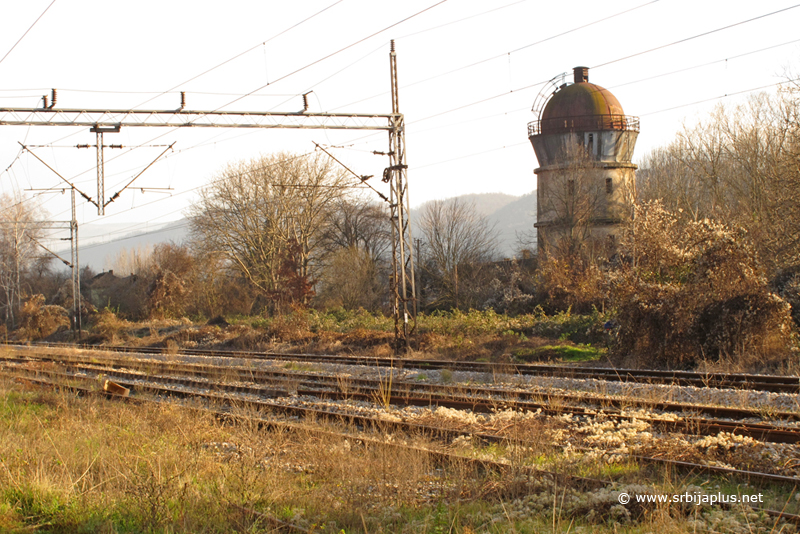
Water tower for supplying steam locomotives with water in Grdelica
From the glamour of the Orient Express to a witness of history: Discover the story of the Thessaloniki Railway on Srbija plus and read the full research paper in the NCD Review.
Read the academic paper by Zoran Cvetković examining the railway and history heritage Thessaloniki Railway.
Read the PaperSolunska pruga: tehnička evaluacije, železničko nasleđe i istorijsko sećanja na pruzi Niš-Preševo
Razvoj balkanske železničke mreže krajem 19. veka fundamentalno je promenio evropsku geopolitiku, stvarajući vitalnu ekonomsku i kulturnu arteriju između Zapada i Istoka. U srcu ove transformacije nalazi se Solunski železnički koridor, tačnije glavna pruga Niš–Preševo, duga 156,76 kilometara. Ova veb stranica predstavlja ekskluzivni apstrakt i ključne uvide iz sveobuhvatnog istraživačkog projekta „Tehničko i arhitektonsko nasleđe na železničkoj pruzi Niš–Preševo“, prvobitno objavljenog u prestižnom časopisu NCD Review (broj 48) od strane Matematičkog fakulteta Univerziteta u Beogradu. Kombinujući rigoroznu arhivsku istoriografiju sa opsežnim terenskim istraživanjima, ova studija ističe kritičnu napetost između modernih infrastrukturnih nadogradnji i hitne potrebe za očuvanjem ugrožene železničke arhitekture iz 19. veka.
Apstrakt. Razvoj železničke mreže u Kraljevini Srbiji krajem 19. veka uspostavio je ključnu geopolitičku i ekonomsku arteriju, koja povezuje Zapadnu Evropu sa Bliskim i Srednjim istokom. Ovaj rad predstavlja sveobuhvatne nalaze istraživačkog projekta „Tehničko i arhitektonsko nasleđe na železnici Niš–Preševo (Solunska železnica)“, procenjujući ovu specifičnu prugu, dužine 156,76 km, u kontekstu šireg istorijskog i savremenog okvira koridora Beograd–Preševo (Panevropski koridor X).
Koristeći multidisciplinarni pristup, koji kombinuje arhivsku istoriografiju sa opsežnom metodologijom terenskog istraživanja, ova studija sistematski dokumentuje građevinske objekte na pruzi, tehničke uređaje i arhitekturu stanica. Rezultati otkrivaju kritičnu tenziju između modernizacije infrastrukture i očuvanja nasleđa. Tekuće delimične rekonstrukcije trase i zatvaranje velikog broja stanica i stajlišta doprineli su obrušavanju staničnih zgrada s kraja 19. veka, a koje su prvobitno izgrađene prema standardizovanim evropskim arhitektonskim tipologijama. Zato autentični fotografski i tehnički registar, kreiran u okviru ovog projekta može da inicira i posluži neophodnu zaštit tehničkih uređaja i železničkih, građevinskih objekata.
Štaviše, rad ispituje bogate socio-kulturne i istorijske slojeve pruge, prateći njeno zlatno doba od 1883. do 1977. godine, kada su prugom prolazili legendarni, luksuzni vozovi usluge poput Orijent ekspresa i Simplon Orijent ekspresa. Takođe, dokumentovana je velika tragedij iz novijeg perioda – vazdušni napad NATO-a 1999. godine na civilni putnički voz u Grdeličkoj klisuri. U članku je data i nepristrasna analiza izveštaja suprotstavljenih međunarodnih pravnih i humanitarnih organizacija i institucija. Konačno, ova studija tvrdi da, uprkos hitnim tehničkim i ekonomskim ograničenjima, Solunska pruga poseduje jedinstvenu istorijsku i arhitektonsku dubinu, što je čini glavnim kandidatom za integraciju u globalne mreže turizma vezanog za železničko nasleđe.
Ključne reči: Solunska pruga, pruga Niš–Preševo, železničko nasleđe, arhitektura, železnička istoriografija, Orijent ekspres, Grdelički most, memorial.
Od glamura Orient ekspresa do svedoka istorije: Pročitajte priču o Solunskoj pruzi na portalu Srbija plus i rezultate istraživanja objavljene u časopisu NCD Review.
Pogledajte dokumentovanu reportažu i analizu Zorana Cvetkovića o železničkom i istorijskom nasleđu Solunska pruge.
Pogledajte reportažu
Download the full paper from:
|
|
|
|
|
eLibrary of Mathematical Institute of the Serbian Academy of Sciences and Arts |


